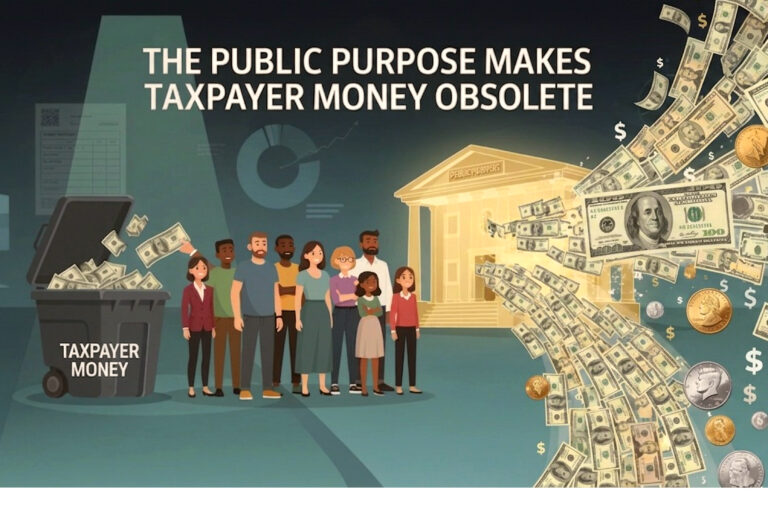
It seems like every time I turn to any of the so-called left wing outlets on my Sirius subscription in my car I hear an outraged politician, commentator, man on the street, outlet expert, and anyone else that may say stuff into a microphone all use the phrase taxpayer money.
There is no such thing as taxpayer money, but “they” all say it and so do many of you reading this. Many of you hear it and get mad that your money is being used to pay off insurrectionists. But that tax money is not yours. It never was. What is more important than that is the very framework of the phrase “taxpayer money” implies that only persons that pay taxes should decide where that money should be spent. The further implication is that persons who do not pay income taxes should not get any say in how “taxpayer money” is spent. Think just a little deeper and realize that every single person on United States territory who purchases something pays for some else’s income tax, property tax, gas tax, sales tax, and on and on. That includes immigrants, both documented and not, visitors, foreign visa students, and on and on.
So, whose money is being spent paying off insurrectionists, building grand ballrooms, rounding up people seemingly at random and putting them in detention centers, and on and on?
Since we are talking about federal money, let us look at the US Constitution! I will focus on the Constitution’s most neglected section. They wrote it last; we read it first. In fact, the famous opening of the Preamble to the United States Constitution inspires this website (A More Perfect Nation) you are reading this on.
“We the People of the United States, in Order to form a more perfect Union, establish Justice, insure domestic Tranquility, provide for the common defence, promote the general Welfare, and secure the Blessings of Liberty to ourselves and our Posterity, do ordain and establish this Constitution for the United States of America.”
It is pretty clear that when Congress appropriates any spending, it should fall into Establishing Justice, Providing for the Common Defence, Promoting the General Welfare, AND LAST Secure the Blessings of Liberty to Ourselves and our Posterity.
We can break that down in many dimensions, but most importantly, notice the importance of the first word introducing each clause. Establishing Justice, is not static; it is an active word implying that the work of Justice is never ending. But providing for Defence is static; once a military is established, it has one job. Sure, the tools change, but the purpose stays the same forever. Promote is another active word; it tells us it should be dynamic, adapting along with technology, an evolving culture, national growth, immigration and on and on. Welfare applies to anyone on United States territory enjoying the same liberty and assurance for their wellbeing as any citizen, just by using another word, General. It does not say citizens and legal residents only. Universal characterizes secure laws and regulations. Posterity informs us that Liberty does not expire.
The US Constitution’s text reinforces the above interpretations, with specific mandates in the clauses and articles. It clearly states that only citizens have a vote, and that rights and our laws apply to anyone living on US territory, and it even leaves open the possibility that people may decide the option that rights not granted in the Constitution. There is untapped power for democracy to flourish.
Wrapping all that into a single phrase, all laws and regulations approved by Congress must serve the above-mentioned public. We can conclude that all appropriations should Promote a public purpose.
When Congress exercises, its sole authority to spend US dollars, it can only be for a public purpose. The money being given to insurrectionists serves no public service. When we talk about government spending, always ask: does this serve a public purpose? And that definition of public spending takes away the false narrative of the wealthy claiming they deserve more say in public spending because they pay more taxes. The amount of tax you pay becomes irrelevant, and Public Purpose ascends.
Using the Public Purpose requirement will not end political debate, in fact it may increase it. But the debate becomes more focused on policy than ideology.
In the end any dollars you have were introduced into the economy by the federal government. Don’t believe me? Try printing your own money. It was lent out to the public to encourage a prosperous economy. When you pay taxes, that is your payment on the loan from the federal government.
Public Money by Brad Sandler March 10, 2025 CURRENT EVENTS It is about all of us. It is trivial, but it reverses a frame being…
6 -Time Travelling for Jobs by Brad Sandler May 26, 2014 CORPORATE DISSONANCE To policy geeks, it would essentially accomplish what the Fed is trying to do with…
Linwood, Kansas by Vernon Justice February 18, 2014 ECONOMIC POLICY I had just arrived in Kansas City, Kansas. Many people are unaware that there are…